October 30, 2026


Ask someone from a small Italian town to name the most important week of the year and they probably won't say Christmas. They'll name the saint on the banner hanging from the balcony, the one whose statue gets carried through the streets on a route that hasn't changed in living memory. The festa patronale is not folklore staged for visitors. It is the town's birthday, its family reunion, its yearly argument about who carries the front of the platform, and its excuse to cook for three days straight.
For a traveller, these festivals are one of the easiest ways to see a place as it actually is. They are also easy to get wrong: to photograph people mid-prayer, to block a procession, to assume the whole thing is a street party. Here is what's behind the day, and how to enjoy it without getting in the way.
Every Italian comune has a santo patrono — a heavenly advocate, chosen by the community rather than assigned from above. The logic is old. In the early Christian centuries, congregations gathered around the memory of a local martyr, often the one whose relics rested in their church. A town with a saint's bones had a resident protector, someone to negotiate with during drought, plague or war. Devotion grew from there, and Rome eventually formalised what the locals had already decided.
This is why the patron is often not the famous saint you'd expect. A village may honour an obscure third-century martyr over Francis or Anthony, because that martyr's relics are under the altar and have been for centuries. It's also why some towns have several co-patrons and a calendar of secondary feasts, each with its own small procession and its own food.
Many patronages were formalised after a disaster. When plague or an earthquake passed a town by, the survivors made a vow: an annual procession, a mass, a gift to the church, in perpetuity. Some of those vows are still being kept, generation after generation, by people who inherited the obligation along with the house.
Dates are not random. A large share of patronal feasts sit on older agricultural hinges: San Martino on 11 November, when wine is ready and the last of the season's warmth arrives; San Giovanni on 24 June, at the summer solstice; Santa Lucia on 13 December, near the shortest days. The Church placed its saints over festivals that were already there, and the countryside kept its rhythms.
In practice, the date moves. If the saint's day falls midweek, many towns shift the main celebrations to the nearest weekend, and the civic holiday may or may not follow. Always check the current year's programme — the comitato that runs the festa usually publishes it on a poster, on the town website, or on a Facebook page that is updated more reliably than the official one.
Don't confuse a festa patronale with a sagra. A sagra is built around food and wine, often a harvest; a patronal feast is built around the saint, and the food comes second, however good it is. In small places the two blur into a single weekend, which is part of the charm.
The religious core runs on a fixed pattern, with local variations. The sequence usually looks something like this:
Behind it all is a volunteer committee — the comitato festeggiamenti — that spends months raising money, booking the band, and negotiating with the fire brigade about the fireworks. In many towns the confraternities, lay brotherhoods that can be centuries old, handle the ritual details. If you want to understand a place, watch who is standing where.
Some are solemn and almost silent, and some are closer to controlled chaos. In Gubbio, on 15 May, three teams of men run through the streets carrying heavy wooden candles up to the basilica of Sant'Ubaldo. In Cocullo, in the Abruzzo mountains, the statue of San Domenico is carried on 1 May draped in live snakes caught by local serpari in the preceding weeks. In Nola, near Naples, eight towering wooden structures are shouldered through the town for San Paolino. Palermo's July feast for Santa Rosalia fills the streets around the old city for days, and Cagliari's Sant'Efisio procession on 1 May draws participants in Sardinian costume from across the island.
The lesson for a visitor is simple: don't assume. Arrive early, watch how the crowd behaves, and take your cues from the people around you. In a solemn procession, talk quietly or not at all. Where the atmosphere is joyful and noisy, there's no need to be reverent — but there's still a statue of someone's saint in the middle of it.
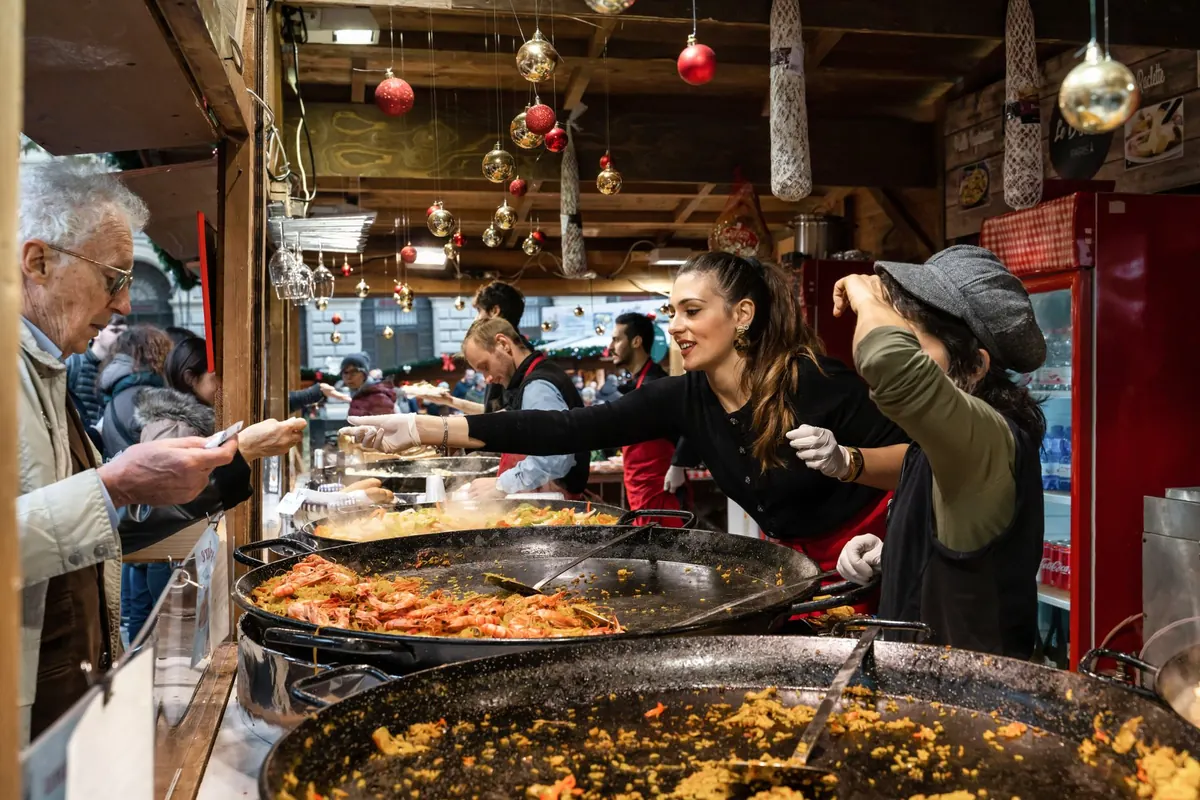
Patronal food is specific, and it usually has a reason. For San Giuseppe on 19 March, pastry shops across the south fry zeppole — choux rings topped with custard and a sour cherry — because the feast falls in Lent and the day traditionally allowed a break from fasting. For Santa Lucia on 13 December, Sicilians cook cuccia, boiled wheat berries with ricotta and sugar, originally a dish of thanksgiving for a famine relief shipment of grain. On 13 June, the feast of Sant'Antonio, loaves of bread are blessed at Mass and handed out; in many parishes people take them home rather than eat them on the spot. Around San Martino, the new wine comes out and trattorias serve whatever the autumn gave them.
Look for the free table. Many festas include a distribution — blessed bread, a bowl of cuccia, a plate of pasta for anyone who turns up — usually funded by the committee or by a family in memory of someone. Accepting is polite; a small contribution in the box is welcome but not obligatory. If you're handed something, take it, say grazie, and eat it.
Check the year's dates rather than the saint's day on the calendar, and check whether the town celebrates on the Sunday. Book accommodation early if the festa is famous — Sant'Efisio, the Gigli in Nola, the Corsa dei Ceri in Gubbio and Palermo's July feast all draw crowds from well beyond the town. Expect road closures and blocked parking from mid-afternoon, and plan to stay on foot. Eat before the procession if you're hungry; the good tables are booked and the rest are full.
And go to the Mass, even if you're not religious. Standing at the back of a village church while the whole town fills the pews is the clearest window you'll get into what the day actually means. Then eat, watch the fireworks, and learn the two words that will make you welcome anywhere: buona festa.
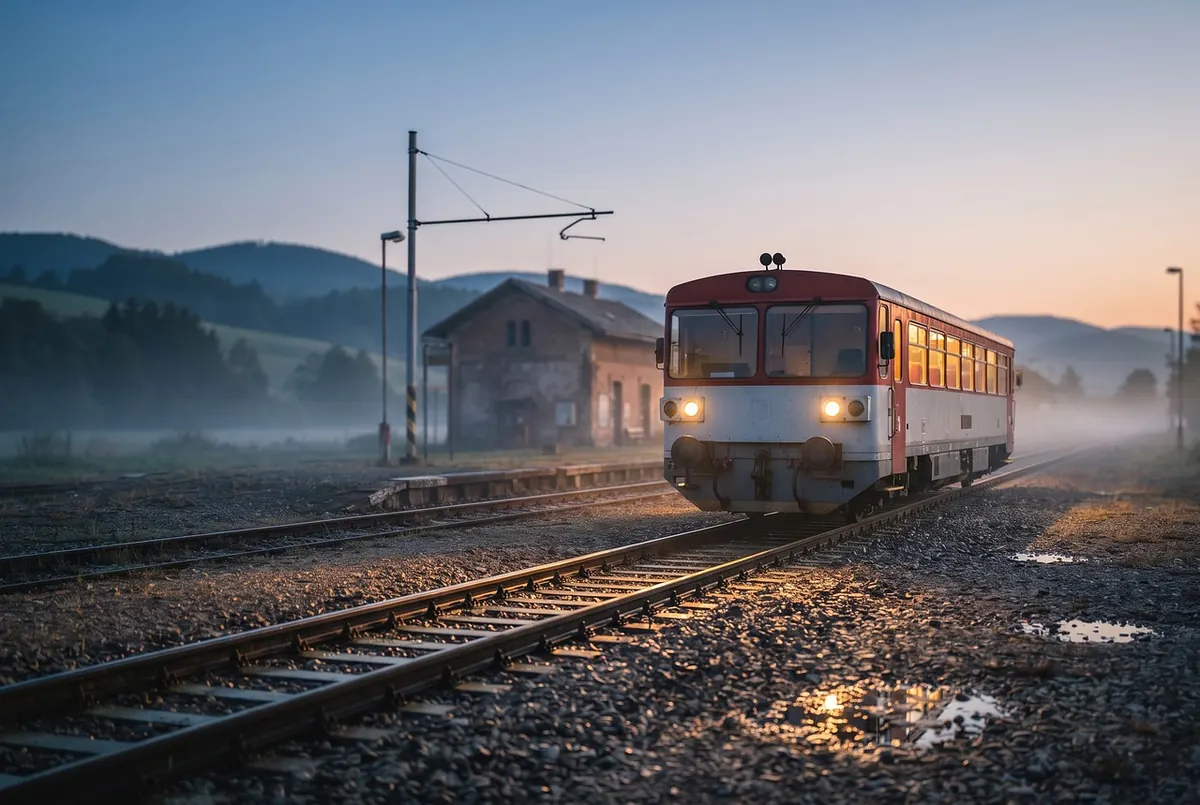
Photo: Photorama / Pixabay
Daily style, beauty, and life inspiration..
Copyright © 2026 Ambra Oggi. All rights reserved. Ambra Oggi.