October 30, 2026


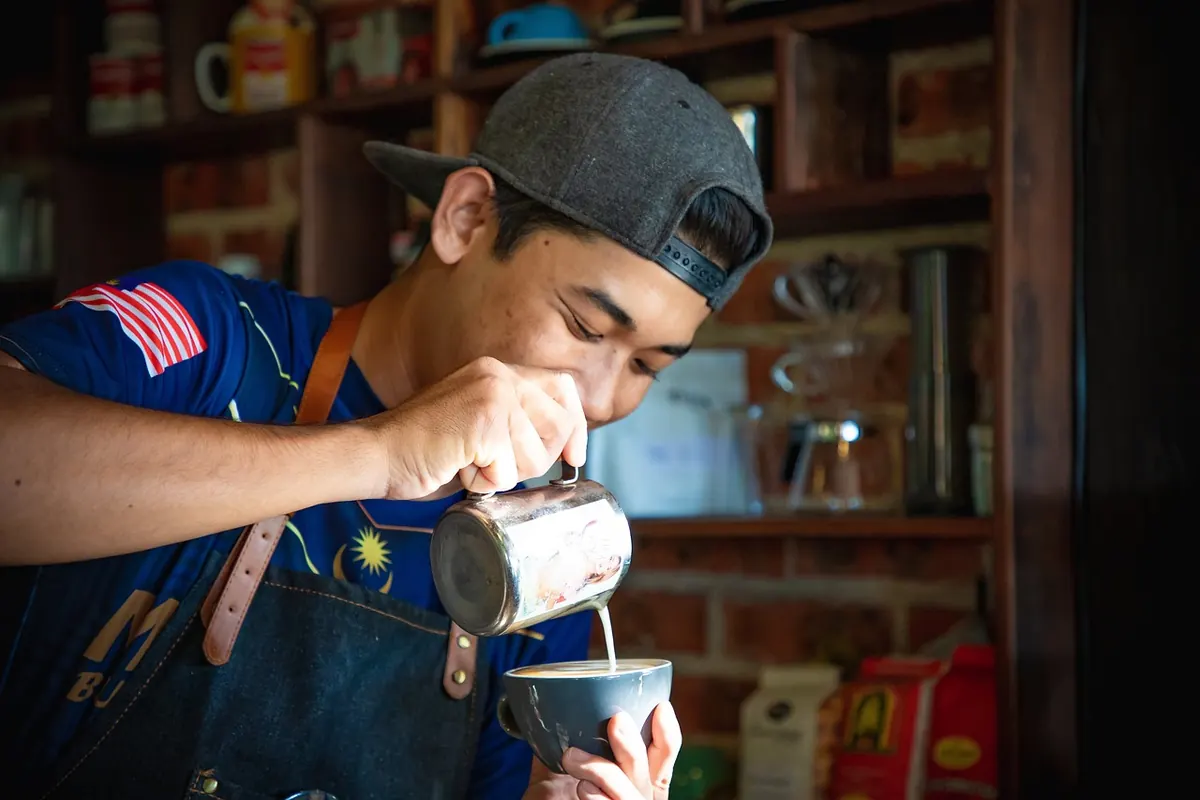
A coffee bar in Italy is a small, loud, efficient machine, and it runs on habits nobody explains to visitors. The first time you walk into one, the scene can be confusing: people standing shoulder to shoulder, a cash register near the door, one barista working two machines and a grinder at once, and no obvious queue. The good news is that the rules are few, consistent, and learnable in about ninety seconds. Get them right and the whole country opens up, from a station bar in Milan at seven in the morning to a tiny pasticceria in a Sicilian side street at noon.
Start with the word itself. Il bar is where Italians go for coffee, and it covers far more ground than a coffee shop does elsewhere. In the morning it is a breakfast counter: espresso, cappuccino, a cornetto, a quick exchange with the barista. At lunch it turns into a place for a panino or a tramezzino, eaten standing up. In the evening it may become an aperitivo spot, with spritz and small bowls of chips or olives on the counter.
Many bars also sell bus tickets, stamps or lottery scratch cards, and some have a gelato counter in summer. So don't be surprised if the person next to you is buying a coffee and a scratch card at the same time. The rhythm is fast, the prices are modest, and the whole visit often takes less than five minutes. That is not rudeness. That is the format.
The single most useful thing to do when you walk in is to stop and look, rather than walk straight to the counter. Two systems are common, and both are normal.
In many bars, especially in cities, at stations, and anywhere busy, there is a cassa near the entrance. You queue there, say what you want, pay, and get a small receipt called a scontrino. Then you take that receipt to the counter and hand it over, or place it where the barista can see it. Keep it until you leave: you can be asked to show it near the exit.
In other bars, particularly in smaller towns and neighbourhood places, you simply order at the counter and pay when you finish, either at the register or to the person behind the bar. If you are unsure which system is in play, watch what the person in front of you does. The giveaway is whether people are holding a small piece of paper while they wait.
Italians drink coffee standing at the bar for reasons that are partly social and partly financial. Standing service is the default and the cheapest option. Sitting down, whether at a table inside or outside, usually costs more: either a service charge appears on the bill or the table prices are simply higher than the bar prices. In tourist-heavy squares the difference can be considerable.
There is nothing wrong with sitting. It is a pleasant way to spend twenty minutes with a newspaper. But choose it deliberately, not by accident. If you order at the counter and then carry your cup to a table, someone will politely redirect you, or you will end up paying the table price anyway. If you want table service, take a seat and wait for a waiter. If you want the classic experience, stand at the bar, drink your espresso in two or three sips, and leave.
One more detail: some bars have stools along the counter. Ask before assuming they count as bar service, because in some places they are treated as table service.
You do not need much Italian, but a handful of phrases will carry you a long way. Use buongiorno when you enter and grazie, arrivederci when you leave. Then try these:
Avoid asking for "un latte". You will get a glass of milk. Ask for a caffellatte or a latte macchiato if that is what you mean.
The famous rule about cappuccino is a custom, not a law. Italians generally drink milk-based coffee before eleven in the morning, and ordering a cappuccino after a big lunch will earn you a look, though nobody will refuse to make it. If you want to blend in, keep milk for breakfast and switch to espresso for the rest of the day.
Timing matters in another way. Between roughly half past seven and nine in the morning, the bar is doing its heaviest business, and people are on their way to work. Drink up, keep your elbows in, and do not hold a table with a single cup during the rush. Outside those hours, nobody minds if you linger over a coffee.
Two more small habits: sugar is usually self-service on the counter, so add it yourself, and an espresso is meant to be drunk quickly, not nursed. A glass of water sometimes arrives alongside it, but do not count on it.
Tipping is not expected in a bar. Many people round up or leave a few coins in the saucer, and that is generous enough. Nobody will follow you out.
Ask for the bathroom before you order rather than after, and accept that some very small bars simply do not have one. If there is a queue, let the person with a train to catch go ahead. And if you become a daily visitor, the real reward is recognition: the barista who starts making your usual the moment you appear. That is worth more than any guidebook tip, and it is earned by small things — a greeting, a please, a quick exit when the place is full.
Do that two mornings in a row and the third one becomes easy. Order the same thing, pay the same way, and by the end of the week you will have a bar.
Photo: Peggy_Marco / Pixabay
Daily style, beauty, and life inspiration..
Copyright © 2026 Ambra Oggi. All rights reserved. Ambra Oggi.